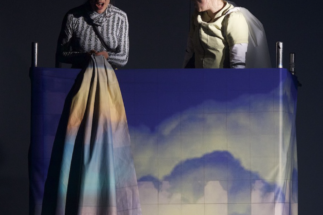

Biography
Cécile Bally uses DIY magic, absurd humor and maximalist scenography to trigger dreams and nightmares, as well as to interrogate the role of narration in performance. My performances are rooted in the genres of science fiction and magical realism, which I use to examine how specific entities (for instance vampires, supermarkets and suburbs) give rise to utopian and dystopian visions.
Cécile graduated in Dance and Choreography at the Berlin University of the Arts (HZT – UDK) in 2016 and holds an MA in Economics from the Ecole Normale Supérieure and the Pantheon Sorbonne University (2013). She based her first solo An organizational study, that’s my work (2014) on her MA Thesis in Decision Theory which examined how ideas emerge and develop in dance rehearsal processes.
From 2016-2018, Cécile created a series of works dealing with monstrosity and rationality in modern times (The price is Right, Aktion, and The Sleep of Reason). Starting with The End of the Road (2019), she created a new series of performances around the construction of collective futures in relation to urban space and ecological collapse. She co-signed The Flood (2021) with Emma Tricard, and über überüberübermorgen (2022), a children’s performance anchored in solarpunk futurity, together with Cathy Walsh.
Cécile is currently conducting research for a new body of work focusing on how videogames allow us to rethink the notion of communities, and the rules, bugs and boundaries of the world we experience.
In residentie Glitchless
26.05.2025 – 01.06.2025
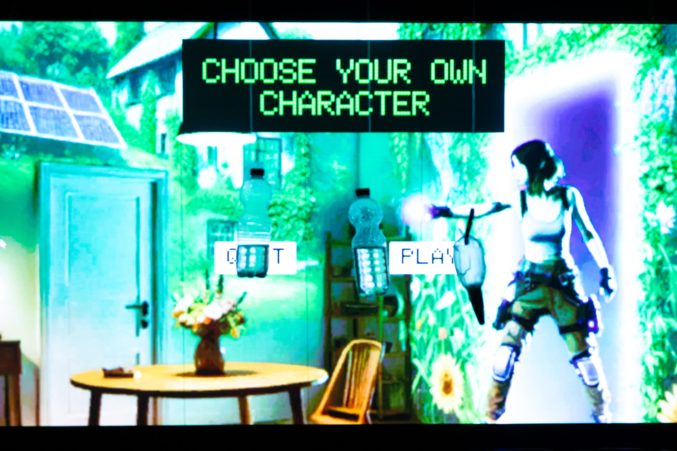
Glitchless is a performance that explores what happens when there is no main character. Inspired by the logic and aesthetics of video games, the piece focuses on Non-Player Characters (NPCs) – figures designed to support a hero’s journey, often overlooked and without agency. What kind of world emerges when performers embody only these background roles?
Glitchless invites us to reconsider what we perceive as central or marginal. It reveals how the same situation can shift in meaning depending on perspective and role. The performance blends live action with video projection, combining footage from live-played games and custom-made sequences created for the work. It plays with perspective, duplication, and visual layering, producing moments of distortion, and narrative slippage. Performers interact with and manipulate their projected environment, creating intentional “glitches” and challenging the boundary between main and minor roles.
Glitchless also builds on a four-month workshop process with teenage girls, who developed their own games and characters—imagining alternative narratives and worlds that reflect their desires, humor, and frustrations with existing gaming culture. Their ideas directly informed the themes, characters, and visual language of the performance.
By shifting the spotlight to the figures who usually populate the edges of our vision, Glitchless questions how meaning is assigned, who gets to act, and how supposedly passive figures might reclaim narrative power.