
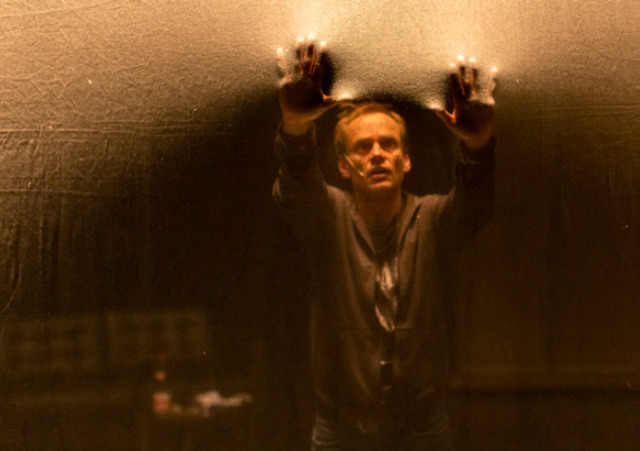
Annihilation
Thomas Ryckewaert
Description
What we know is not what we desire. – Patricia De Martelaere.
Since the dawn of modern science, we have struggled to process its insights and consequences. In recent centuries, scientists have stumbled upon such strange, counterintuitive, and emotionally challenging discoveries that they sent shockwaves through our collective consciousness. A gap exists between what we know about the world and how we experience it. And that gap is widening. Recent insights in areas like cosmology, climate science, biology, and AI are unveiling or generating a reality that is becoming increasingly difficult for us to imagine. The cosmos is said to be a hologram. Artificial neural networks are becoming creative. My “self” turns out to be a neurobiological illusion. The ice caps are melting.
Facts are proving stranger than fiction. As cultural critic Mark Fisher writes in The Weird and the Eerie: “A black hole is stranger than a vampire. The way it rends space and time completely transcends our everyday experience of reality, and yet a black hole belongs to the reality of our cosmos—a cosmos that must therefore be far stranger than our experience can grasp.” How do we relate to this gap? How can we address this strangeness? How do we feel about it?
From my scientific background, I have always been interested in this gap in my theater work, and to what extent the performing arts can build bridges across it. I believe that the strange tension between what we know and what we desire holds enormous dramatic potential. As mentioned above, in my creations of recent years, I have been exploring ways to stage nonfiction. Move 37 (2019) was a lecture performance co-created with theoretical physicist Thomas Hertog and explored A.I. and black holes, in an attempt to imagine the unimaginable and to give shape to its uncanny consequences. Chaos (2023) was a solo performance following the sudden death of my father and addressed the intertwining of personal and global loss: how to grieve for a loved one in apocalyptic times of climate change, pandemics, and mass extinction. Mathematics (chaos theory) and biology were deployed in a search for solace. With this application, I want to explore, over a period of six months, how, unlike previous productions, I can start from fiction to address a strange scientific reality, how science and fiction are in tension with each other, and how the combination of the two can lead to a result that is greater than the sum of its parts.
An obvious form for this would be science fiction. But in recent years, a new literary movement has emerged that has come to be known as New Weird. This is a combination of science fiction, horror and speculative fiction that attempts to shape the strange reality we find ourselves in.