
Biography
Kaleider is een studio gevestigd in Exeter U.K. We brengen mensen samen om buitengewone live ervaringen, producten en diensten te maken. We maken ons eigen werk, produceren werk, stellen nieuw werk op en bieden ondersteuning aan kunstenaars om zich te ontwikkelen, grenzen te verleggen en risico’s te nemen met hun ideeën.
We hebben een aantal Resident-kunstenaars, onderzoekers, wetenschappers, creatieve technologen en jongeren. Kaleider Residents vormen de kern van een breder netwerk van mensen, groepen en bedrijven met verschillende achtergronden maar met een gedeelde wens om een aantal van ‘s werelds grootste uitdagingen te keren. Vaak is het werk dat uit Kaleider komt bespeelbaar en probeert het mensen in hun dagelijkse context te onderbreken.
In residentie Kaleider’s Requiem
07.04.2026 – 18.04.2026
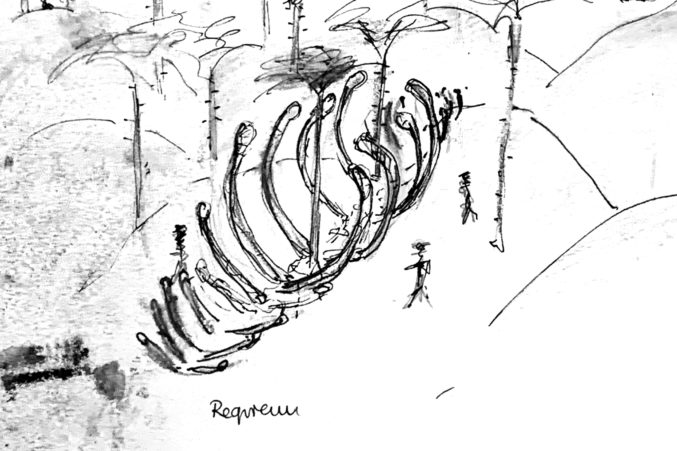
A contemporary requiem for our world, and for life on this planet.
The audience will see 5 performers building a metaphor for the state of the world, set to an epic musical score mixed and amplified with the breath and heartbeats of the audience. As the show begins, performers carry dozens of large objects into the middle of the play space. They look like parts of a structure made of found materials: wicker, cotton fabric, metal wire. The performers tie and bolt the objects together, joining them to other structural elements that are already on the ground. They form a long, dense pile in an orderly yet indiscernible jumble, almost 20 metres long and a few metres wide.
As they start to build, the music begins, softly at first. Beautiful, longing, captivating. The movements echo a classical requiem, but with a contemporary flair. As the build progresses, some performers come towards and amongst the audience. One performer asks audience members to breathe – an instrument records their inhalation and exhalation. Another, with a different instrument, asks if it is ok to record the rhythm of their pulse. The heartbeats and breath of the audience are mixed into the music by another performer at a sound desk. The melody and beat of the composition escalate, drawing life from the audience, and the track grows louder and louder.
The performers are methodical, concentrated. Moving more briskly, they finish joining their objects together and assemble on either side of the strange, long pile of wicker. Together, they grasp ropes and wheels, and, calling out to each other, they pull. The music swells, becoming urgent. And then, everything changes. The sculpture unfurls. In one gradual, expansive movement, it blossoms into a massive ribcage, 4 metres tall and 20 metres long. Skeletal, organic, mechanical. The audience find themselves before a massive, mythical creature. Are these its remains, after its death – or is this a futuristic life form? The creature unfolds through and around the surrounding architecture, the ribs intersected by trees or lamposts.
The landscape is transformed: into an archaeological site, overgrown? Or has something fallen from a different time or place, into the present? The task isn’t done. The performers tie down their ropes, anchoring the creature in place. They gesture to each other with increasingly larger motions, calling out, coordinating their movements as they near completion. Almost frantically now, they drag lights into the beast’s ribs, filling it with beams of light and casting shadows on the ground. The music, which seemed to have already reached its peak, keeps building even further. Choral, instrumental, and ever rising, the requiem is unashamedly grandiose, epic. Its beat grows deeper, enveloping the scene. The performers’ urgency intensifies, turning almost wild with the music, as they increase up the volume. They hurry along the creature’s spine, filling it with haze, which catches the light, so the entire scene glows. It is overflowing, dramatic, beyond saturation: colour, light, sound, movement.
A performer grasps a handle on a giant wheel with both hands and, in a strong steady rhythm, turns it. The creature is breathing. Breathing, keeping rhythm with the breath that is mixed into the music. It comes to extraordinary life, uncanny and vivid. The ribs expand. Then contract. In, out. Finally – finally – the melody, crashing and soaring, halts. And in the emptiness, without missing a beat, the breath continues. Time is suspended. The tension of the music is replaced by perilous, fragile life. Oversaturation melts into catharsis. Steady, rhythmic, the breathing creature holds everyone in stillness: performers, audience. It is our breath, our creature, our world: a deathly thing that is still alive, which we are suddenly facing together. Beautiful and dark. In the silence, the audience face themselves. Ourselves. The breath carries on. Longer than expected, forcing the experience deeper.
Gradually, the melody returns. It circles back to a refrain from the start, now familiar. Still majestic, unfazed, it picks up the audience and takes them towards the ending. The requiem reaches its close, the performers dim the lights and step away. Beyond the end, the creature carries on, breathing with us, now silently, dead-and-alive.
Requiem. A musical composition for the repose of the souls of the dead. An act or token of remembrance. Middle English requiem, from Latin (accusative of) requies, meaning ‘rest’.