
Biography
Ciel Grommen and Maximiliaan Royakkers are architects by training and through family ties, connected to the world of agriculture. When Ciel’s brother-in-law asks for help renovating housing for foreign seasonal workers, they take on the task with open-hearted curiosity. Through conversations with developers, policymakers, social workers, and farmers, they map a landscape shaped by deep economic forces. But when they try to understand what it means to live in these accommodations, the silence of the workers reveals a blind spot — and the need to ask different questions.
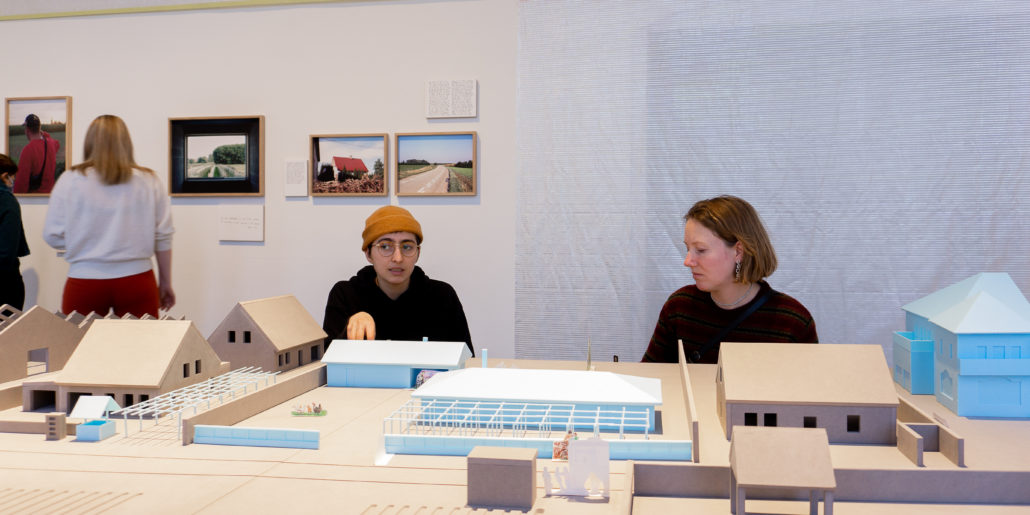
In this performance — a hybrid between documentary and dialogue — Ciel and Maximiliaan use models, film, and scenographic elements to recount their fieldwork journey, from Haspengouw to Brussels, to Romanian villages and back again. What initially seemed like a simple design question gradually unfolds into fundamental inquiries about living and working, the livability of our culture, and what it means to come home to a farmyard.
Ciel Grommen and Maximiliaan Royakkers are part of Seasonal Neighbours, a collective that, since 2021, has been exploring the themes of agriculture, cohabitation, and seasonality in the European countryside through artistic and research-driven practices.
In residentie Houses for a Seasonal Neighbourhood
02.02.2026 – 13.02.2026
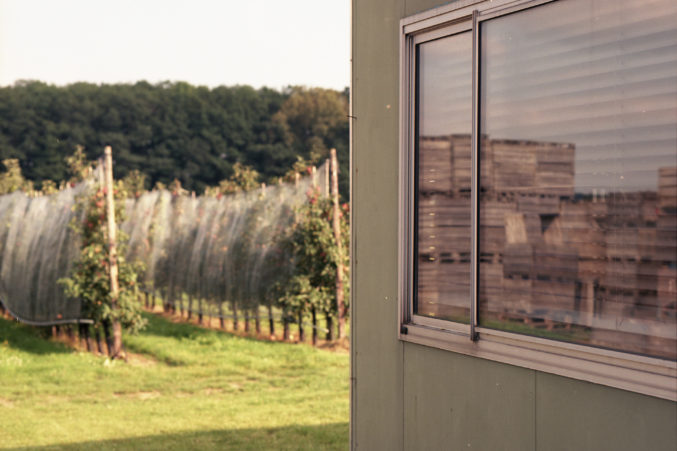
“We don’t have a house here, our house is in Bulgaria. In Belgium, there’s only work.” This statement from a young seasonal worker touched upon the core of our research: the separation between living and working. While our house symbolizes comfort and tranquility, seasonal workers often live temporarily in the place where they work—without a real connection to the environment.
In contemporary agriculture, this contrast is painfully apparent. Workers live in containers, converted stables, or temporary parks, often far from home. Despite new European standards, this remains an invisible topic in public debate. How can we better understand these forms of temporary cohabitation? What does it actually mean to live somewhere, and how does a sense of home arise?
With Houses for a Seasonal Neighborhood, we explore the relationship between work, living, and the land. We conduct conversations with seasonal workers, architects, and residents, and translate these exchanges into a performative form—through film, sound, or conversation.
Not to offer solutions, but to create space for empathy and awareness. We want to connect the public with seasonal workers as more than just laborers—as neighbors, residents, and people with stories. At the same time, we reflect on our own position as architects and family members of farmers: searching for new ways to live temporarily, caringly, and connected to the landscape.