Art / Earth – Jöklaminni
Art / Earth – Jöklaminni - Artists
Description
Art / Earth – Jöklaminni is a transdisciplinary art-science project initiated by Stray Light and curated by Nicolas Baeyens and Þóranna Dögg Björnsdóttir. The project brings artists and scientists together to explore how we relate to a planet in motion. Taking glaciers as its point of departure, it connects scientific knowledge with artistic engagement with landscapes that are visibly changing and disappearing. Glaciers make planetary transformation tangible: local movements of ice and water are closely linked to global processes such as rising sea levels and shifting ecosystems, which also affect low-lying regions such as Belgium.
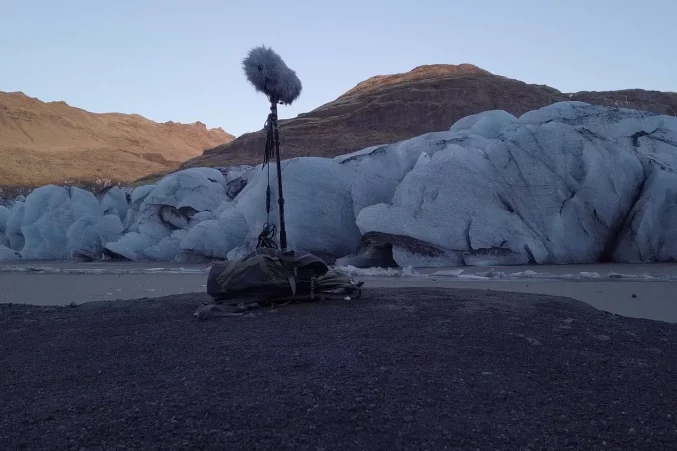
From early March to early April 2026, three Icelandic artists – Julie Sjöfn Gasiglia, Vala Sigþrúðar Jónsdóttir and Sigrún Gyða Sveinsdóttir – will be in residence at C-TAKT in Pelt, where they develop new work and research in dialogue with scientists and fellow artists. Their stay is accompanied by a programme of encounters in Belgium, including meetings with researchers from De Jonge Academie and the Royal Academy for Science and the Arts of Belgium, participation in the Belgian Science for Climate Action conference, and visits to artists and institutions. The residency follows an earlier phase of the project in February at SÍM Residency in Reykjavík, where Belgian artists Mattias De Craene, Stijn Demeulenaere and Kevin Trappeniers undertook fieldwork in glacier landscapes together with glaciologists from the University of Iceland.
These artistic and scientific exchanges generate both artistic and research material. Field measurements gathered during glacier expeditions – including data collected by scientists involved in the European research project ICELINK (Advancing Knowledge of North Atlantic Land Ice Linking Observations and Models), which studies the impact of climate change on glaciers in Iceland and Greenland – feed into the project alongside the artists’ findings. Around twenty-five researchers affiliated with De Jonge Academie will write short essays inspired by these observations. In May, artists and scientists will meet at BAC Art Lab in Leuven for a public exchange, and later this year the project will be featured in EOS Science Magazine. The residencies form the first step towards a larger collaborative project between the participating artists and scientists.