
Biography
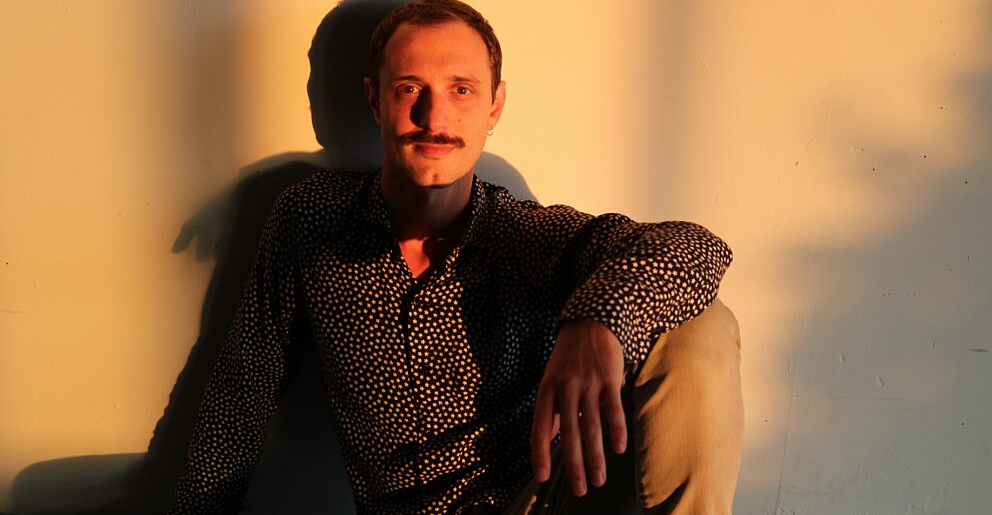
Diego Echegoyen is an Argentine performance artist and researcher based in Brussels, who works, researches and activates in projects merging theatre, expanded choreography, field recording, site-specific and street performance. His practice merges artistic languages in a collective and collaborative performance making.
For his last project, What shines through two different things he developed practices of situated writing and performance composition interweaving historical and personal events, micro and macro scales of real and fictive landscapes in a storytelling enriched by choreographic scores.
He graduated at the Institut Superieur des Arts et Choreographies at the Academie Royale des Beaux-Arts de Bruxelles with a BA in plastic, visual and space arts in Urban Space and holds a post-master degree in artistic research of APASS within the Posthogeschool voor Podiumkunsten.
In 2010 he co-founded the Argentine EL CUARTO Theatre Company where he worked as an actor, dancer, performer and actors’ coach ever since. He is co-founder of the argentine artistic activist collective Escena Política, with whom has worked since 2013 in the crossroad of performance and activism.
In residentie Invisible Cities
01.10.2025 – 01.10.2025
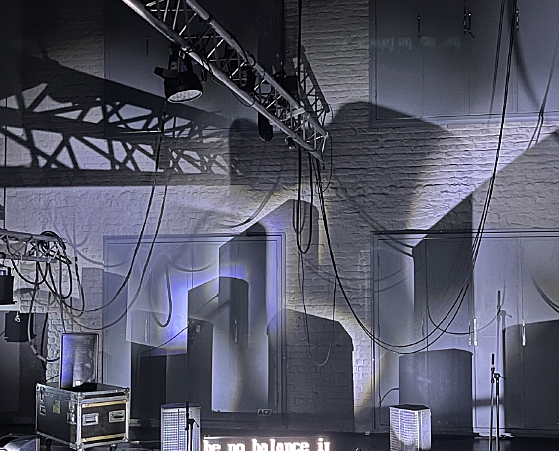
Invisible Cities is a choreographic and sound performance conceived for a set of technical objects/bodies and a single human body. This performative project explores the resonances of the periphery within the center, addressing the invisibility of the marginal and technical bodies by bringing them into focus. The work questions the hierarchies involved in center – periphery dynamics from two different angles: the centrist logic operating in migration flows, and the logic that relegates technical objects to the periphery of the theatrical mechanism while assigning centrality to the human body.
A peripheral human body arrives at the center, its status is diminished. It enters the shadow of its own invisibility but then it comes to focus anew.How can this body — coming from the periphery to the center and reduced to its shadow — come into focus without disputing the centrality? How can the periphery resonate within the center while acknowledging the process of invisibilization it has endured?The piece integrates elements from theatre, choreographic performance, sound installation and visual arts. It is composed by two parts. First, a sound installation provides orientation to the visitors in a dark room, progressively the technical devices of the sound installation become visible and the space shifts. The action that shifts the space becomes performative taking the material to the second part where technical objects and human body performs together.Conceived as a transdisciplinary piece, Invisible Cities needs a non-conventional space (or conventional space that can be used non-conventionally). Its versatility allows to be performed together or by parts depending on the possibilities of the venue