Biography
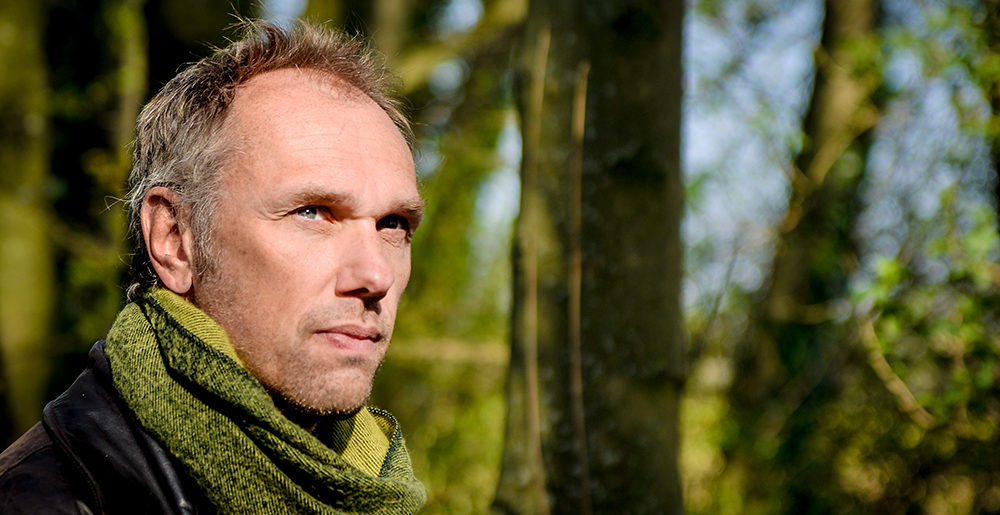
Hofmann’s research focuses on issues of complexity in representation. Because it is the sum of all past experiences and adventures, contemporary knowledge presents itself to us as a vast mass of specific, intertwined information. Even if today’s technologies give us the impression that this information is accessible to anyone, anywhere, at any time, we still lack a systemic understanding of our environments. To remedy this, we might be tempted to smooth out our knowledge, to mould it to our individual abilities. Or would we be even easier to leave it to the specialists to better understand our world? PP Hofmann is not really a believer in this kind of comfortable solutions.
His work, which is part of a conceptual tradition, is mainly rooted in the landscape and attempts to make visible these different levels of complexity. The artist never tires of exploring the landscape at different scales; he constantly creates distortions between time and space, between the general and the particular. Through endurance, repetition, mise en abyme and the confusion between live and recorded, he proposes new readings of immediate reality. Through his installations, Hofmann creates new phenomenological experiences and new readings of the world. The long-term project Portrait of a Landscape is the most obvious example. As in other recent undertakings, he attaches great importance to walking in his practice in order to stay in touch with the smallest details of everyday life.
It is certainly worth pointing out that Hofmann worked for almost 20 years in theatres and opera houses as a video artist. Regular encounters with certain directors and choreographers have inevitably left their mark on him. This meeting of practices gave rise to an installation devoted to the creative processes of Les Ballets C de la B, Alain Platel and Berlinde De Bruyckere for nicht schlafen in 2017.
But it is in Ad Libitum that the link with the theatre becomes even more apparent. Pierre-Philippe Hofmann and Mathias Domahidy literally stage reality, in a particularly demanding and derisive exercise in style. He is currently working on a transdisciplinary project combining choreography and landscape.
In residentie City behind the scenes
08.12.2025 – 14.12.2025
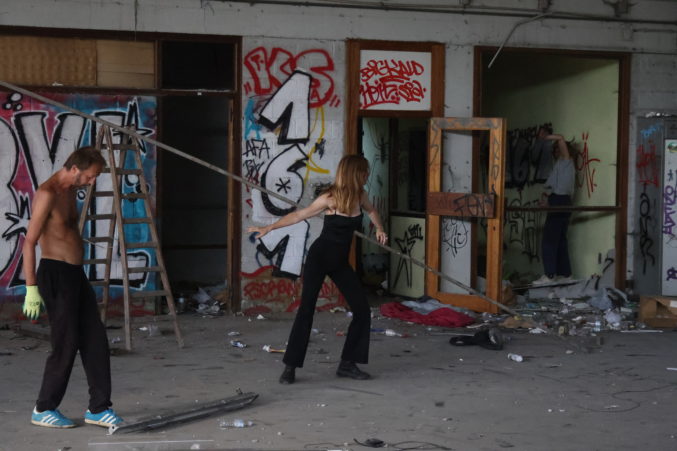
Sound artist Stijn Demeuleunaere, architect/poet/dancer/musician Jolien Naeyaert, and visual/video artist Pierre-Philippe Hofmann (and other artists who may occasionally be involved) are interested in the canal area in Brussels. The canal is, of course, a place marked by an industrial history and new urban planning challenges, but in their view, it is also a space where many small, organic, and discreet transformations are taking place. The perfect counterpoint to the city, yet certainly also inhabited. They feel that this very invisible context teaches us a great deal about the human and ecological fragility of our contemporary cities. Through video and dance, they attempt to give the landscape a voice, a form of expression, by finding a new form that combines moving images, spatial sound, dance, documentary material, installations, and so on.